Bury Not to Praise Mischief Thou Art Afoot in the New York City Theatre World
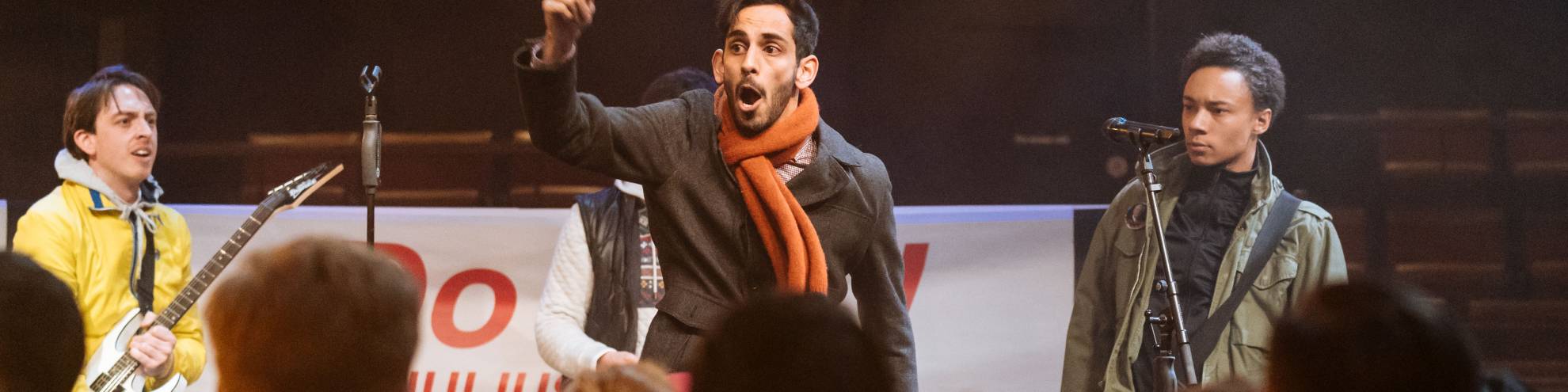
A Political Text for Our Times: Mail Truth, Populism and Public Emotion in Julius Caesar
Matthew d'Ancona
"Cowards dice many times earlier their deaths: / The valiant never taste of death but once". On sixteen Dec 1977, the imprisoned Nelson Mandela signed his name beside these lines from Julius Caesar in the hidden copy of Shakespeare's works that was known every bit the 'Robben Island Bible.'
That the play spoke to the Elizabethan audience of 1599 – animated by rebellion, political turbulence and the question of purple succession – is no surprise. More striking is its endurance as a text for subsequent ages, and a guidebook to power and its practise in our own times.
To an most uncanny extent, the great rhetorical argument over Caesar's corpse between Brutus and Antony mirrors the cardinal divisions revealed past the extraordinary upheavals of the past two years and, more than specifically, the rising of 'Postal service Truth', online populism and simulated news.
As i of the Senators observes, "it is a strange-tending time: / Simply men may metaphrase things after their fashion, / Clean from the purposes of the things." In other words, reality has become fungible, an option capriciously chosen from a buffet according to taste. Rome, like Donald Trump'south America, has succumbed to the allure of what the presidential aide Kellyanne Conway famously called "alternative facts".
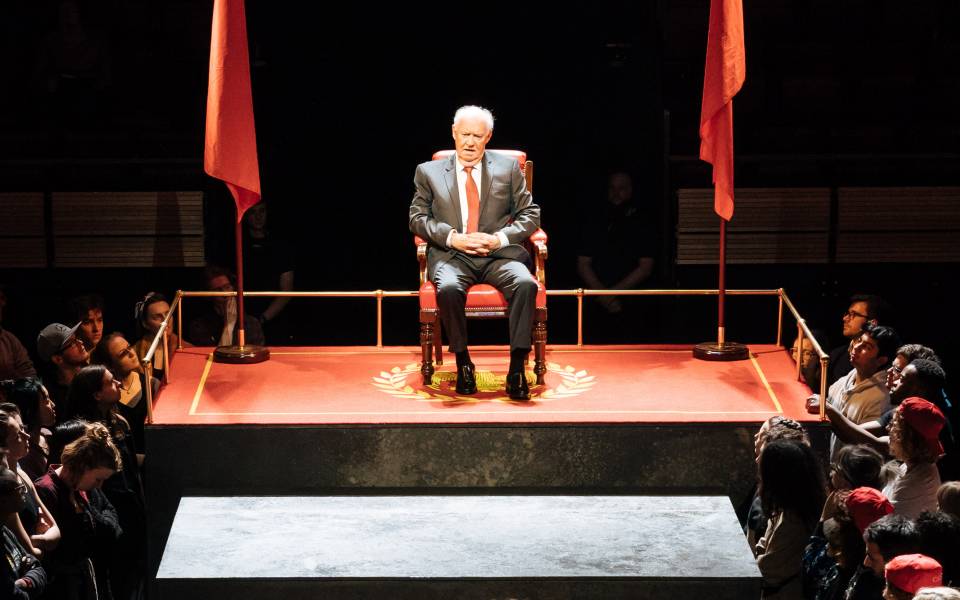
This is what eludes Brutus. In his Stoic vanity, he is the Roman counterpart of the modern liberal élite at its most insulated. He understands, as the philosopher Allan Bloom puts it in Shakespeare'due south Politics (1964), that Caesar is "a man who has built his palace on the ruins of the Republic", but, in drawing that determination, "thinks also well of himself".
He urges the mob to "censure me in your wisdom" and "exist the better approximate", highly-seasoned to dear of country, "a place in the democracy" and hatred of tyranny in the abstract. He instructs them to rise in a higher place the worship of kings: "Who is here so base that would be a bondman?"
In his lofty rationalism, in that location are uncomfortable echoes of the Remain campaign's bombardment of the 2016 electorate with statistics during the European union referendum, embedded in which was the bulletin that simply a fool, an undeveloped citizen, could vote for Brexit.
In his moral certainty – "armed so strong in honesty" as he puts it in his argument with Cassius – Brutus is ever quick to dismiss human being'due south lower instincts and to scorn 'bondmen', 'slaves' and 'undeservers'. He would have nodded equally Hillary Clinton vilified half of Trump's supporters as a "handbasket of deplorables".
No less than Brutus, Clinton personified the belief that a commonwealth is best led by those who have proved their civic virtue, boast the strongest credentials, and have clambered the cursus honorum – the ladder of public office. What her Republican opponent grasped was that the rules of the game had changed. In the age of shattered public trust and rhetoric weaponised past social media – "the universal shout" as the tribune Marullus would have chosen it – politics could become a branch of show business. Trump, a reality TV star rather than a public servant, treated the United states of america voters as an audience consuming entertainment rather than a civically engaged electorate – and was duly rewarded.
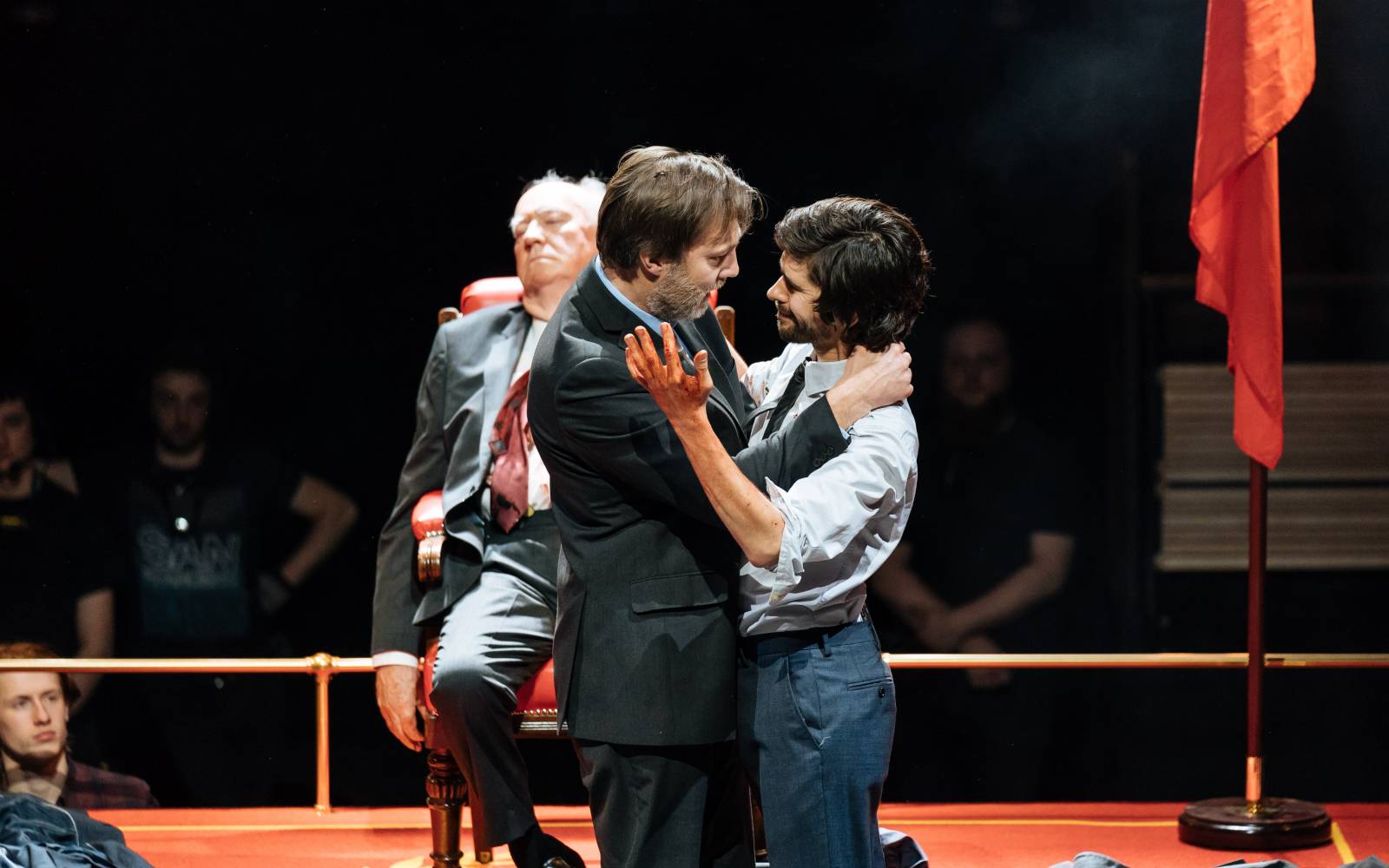
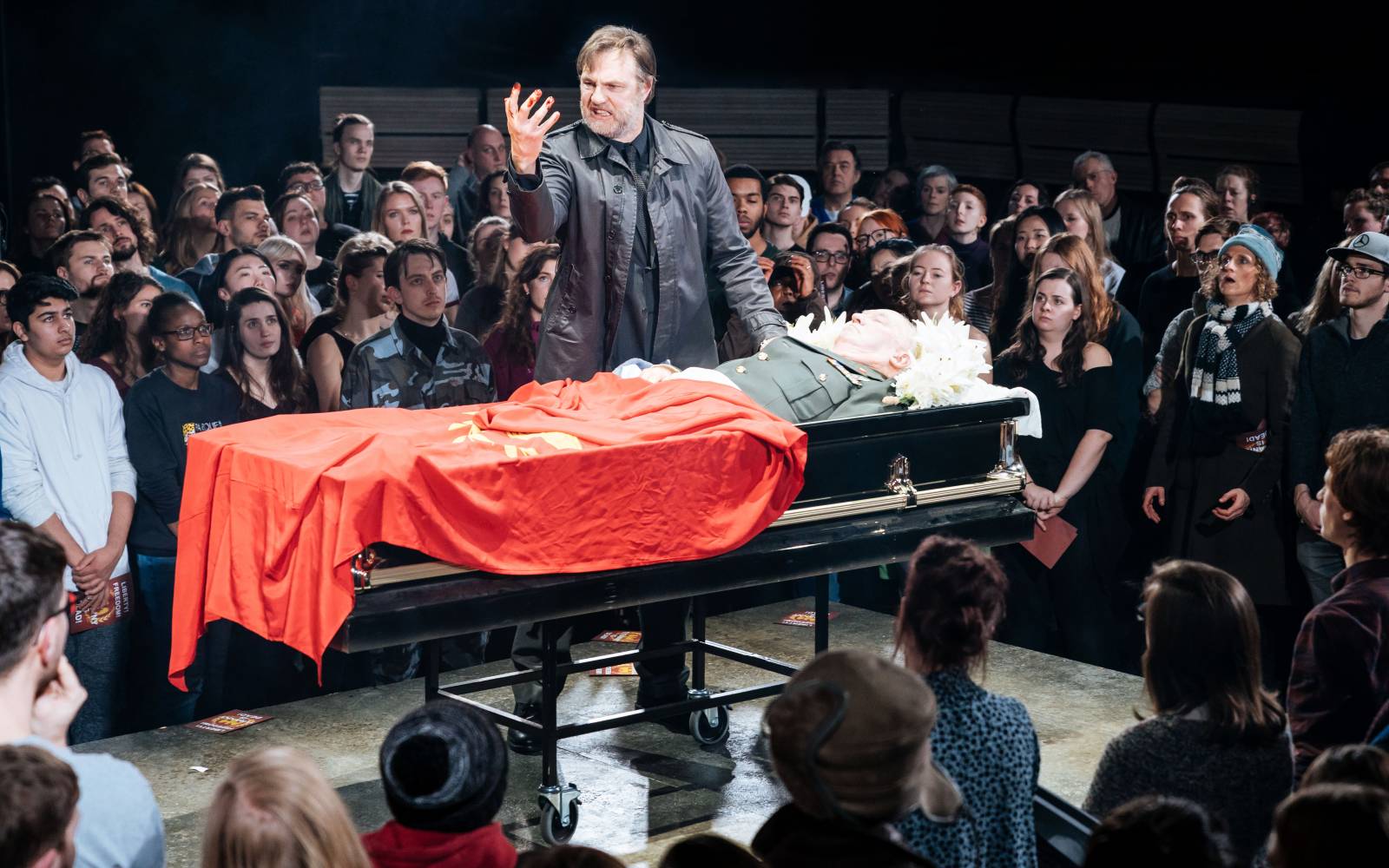
Antony senses the aforementioned potential in the febrile mood of the Roman mob. His oratory is a chilling masterpiece of Post Truth politics, reflecting a cunning recognition that, in febrile times, emotional resonance matters much more rational evaluation.
In addition to his ironic destruction of Brutus, he employs narrative rather than logic, blaming each of the conspirators for a specific wound with all the vigour of a story-teller rather than the forensic detachment of a prosecutor ("Expect, in this place ran Cassius' dagger through"). Whether or not these details are right, they have emotional bear upon, which is all that Antony seeks. Equally Trump in one case said, when asked if it was really truthful, as he claimed, that the tiles in the plant nursery at Mar-a-Lago, his West Palm Embankment club, were personally made by Walt Disney: "Who cares?"
No less than today's about ruthless manipulators of social media feeds, secret algorithms and large data, Antony knows exactly what he is doing. "Mischief, m art afoot, / Accept thou what class thou wilt." Equally Garry Wills remarks in his report of the play'south rhetoric, he grasps "the departure between leadership that issues orders and leadership that recruits cooperation".
It is precisely for this reason that Antony brandishes a document that he says is Caesar's will and buys the support of the oversupply with a legacy of "seventy-five drachmas" a head, as well as access to the fallen leader's walks, orchards and individual arbours.
This is populism at its purest, a promised bonanza with which Brutus's high morality can scarcely compete. The heirs of Antony feel no more compunction promising £350m week extra for the NHS or a "big beautiful wall" along the US-United mexican states border. What matters to them is not honesty or practicality but the immediate visceral response that their narrative provokes.
In today's politics, every bit in Julius Caesar, menace walks hand-in-hand with artificial charm.
Even as he flatters the mob, Antony raises the prospect of "a sudden flood of mutiny", calling upon the very "stones of Rome" to rise in fury. Laced as his speech is with professions of love and comity, it is a call to civil disobedience – as intellectually quack as Trump'south studied evenhandedness between white supremacists and neo-Nazi supremacists after the Charlottesville riots, or his invocation in his inaugural speech of "American carnage". The populists of the 21st Century play with the same fire that ignites Shakespeare's Renaissance Rome.
The failure of Brutus is the failure of and so many élites to recognise the ability of instinct and impulse, and the demand to communicate their values in a way that recognises emotional as well as rational imperatives.
To meet Julius Caesar afresh in our own time is to retrieve that moral and political rectitude is not enough. More than ever, truth needs an emotional delivery system that engages with experience, memory and promise. The pendulum will not swing back from the Corbynite and Brexiteer fringes to a comforting metropolitan centre-basis.
Yet the play is much more than an indictment of oligarchical presumption. It is about us, besides. The clearest-eyed of the conspirators is Cassius who sees not only that Brutus is wrong to let Antony live just that the people themselves are wholly complicit in Caesar'south autocracy: "I know he would non be a wolf, / Simply that he sees the Romans are but sheep."
Shakespeare's plebeians are ovine indeed. They autumn first for Brutus, however miss his entire purpose when they cry "Let him be Caesar" – offering precisely the tyrannical ability from which he sought to protect the democracy. No less quickly are they swayed by Antony's charisma to turn on the conspirators.
Such pliability is easy to disparage as pre-democratic primitivism – until i recalls the faddish speed with which "Oh, Jeremy Corbyn!" became the chant of the summer, or the spectacle of thousands of ordinary Americans shouting "Lock her upwardly!" when Trump mentioned Clinton at his rallies.
Our immunity to the contagions of the herd is not every bit potent as we might suppose, or care to be reminded. If the remarkable events of the past ii years take a lesson, information technology is that modern democracy is not as robust every bit it one time seemed. Less than one in iii of American millennials – those born since 1980 – believe that it is absolutely 'essential' for them 'to alive in a democracy'.
Merely 19 per cent of the same age-cohort insist that information technology would exist illegitimate for the war machine to seize ability if the civilian government proved incompetent. Equally the Harvard philosopher Yascha Mounk has written: "we must at this signal ponder the possibility that the self-correcting mechanisms on which we pivot our hopes for the future will turn out to be just as illusory as those that have proved elusive in the past."
It falls to a lonely plebeian to upshot ane of the cadre warnings of the play: "I fear there will be a worse come up in his identify". What matters more than Caesar's fall is what follows him. "O Julius Caesar, thou art mighty yet!" cries Brutus, every bit Rome descends into violence and he grasps the vicious irony that the conspirators, by killing Caesar, accept made him a god and ensured the ultimate victory of Caesarism.
The same dilemma is posed by gimmicky politics: what happens when the Brexiteers have washed their piece of work? Who will succeed Trump?
Such questions nag at the conscience like ragged nails. Information technology is tyranny, not just tyrants, that we must fear. It is our own weakness that allows charismatic leadership to become autocracy. Julius Caesar remains so unsettlingly gimmicky because its ultimate challenge is not to those who seek power, but to the rest of us. The fault is not in our stars, but in ourselves.
Farther reading

Sounding Names
Peter Holland
In the summer of 2017 a number of Republicans in the U.s.a. were incensed to learn that the New York Public Theatre'southward production of Julius Caesar had Caesar fabricated to await somewhat similar (orange hair, crimson tie) and gesturing even more similar Donald Trump…
More →
The Assassination that Gear up the Template
Mary Beard
The murder of Julius Caesar on fifteen March 44 BCE – the 'Ides of March' in the Roman calendar – is the world's most famous bump-off. Information technology set the pattern for the future. For many of the Roman emperors who followed Caesar likewise came to vehement ends…
More →
Source: https://bridgetheatre.co.uk/a-political-text-for-our-times-post-truth-populism-and-public-emotion-in-julius-caesar/

Post a Comment for "Bury Not to Praise Mischief Thou Art Afoot in the New York City Theatre World"